Kitchen Cabinet Door Storage Ideas That Do Not Break Hinges
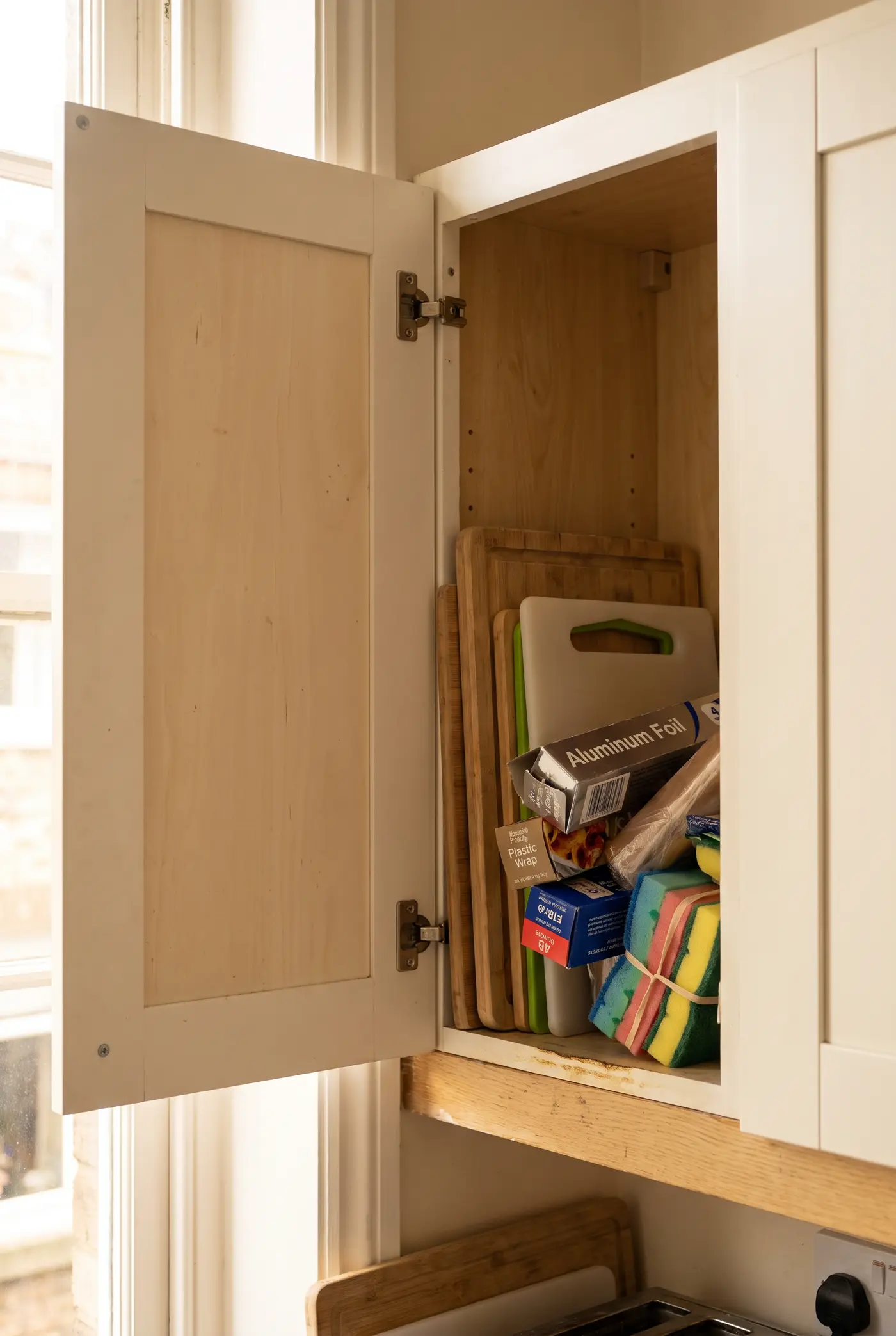
Kitchen cabinet door storage is the closest thing to free space a small kitchen has. Every door is a flat vertical surface you already own, and in most kitchens all of them are empty.
It also has a failure mode nobody mentions until your cabinet stops closing. Here is what works, what does not, and how to tell the difference before you buy.
Looking for the products rather than the method? Under Sink Organizers That Clear A Standard P-Trap
The rule that decides everything: depth
A cabinet door closes into a frame. The gap between the back of the door and the nearest shelf is usually two to three inches, sometimes less.
Anything you mount on the door must be shallower than that gap, or the door will not close. This single measurement rules out most of what looks appealing online.
Measure it: open the door, hold a ruler flat against the inside of the door, and see where the shelf edge falls. Write the number down and refuse to buy anything deeper.
What works on a door
Flat, light, frequently grabbed is the pattern. Specifically:
- Foil, plastic wrap and parchment boxes — they are flat by design and annoying in a drawer
- Spice tins in a shallow single-depth rack
- Sponges, scrub brushes, dish gloves
- Cutting boards, on the inside of a lower cabinet door
- A single roll of trash bags
- Measuring spoons on small hooks
The common thread is that none of these are heavy and none of them are deep.
What does not work
Anything with weight. Cabinet doors hang on two small hinges rated for the door itself. Load a door with canned goods and the hinges sag, the door stops sitting flush, and eventually the screw holes strip out of the particleboard. This is a real repair, not a cosmetic annoyance.
Anything deep. Two-tier spice racks, bins, and most “door organizers” sold generically are built for pantry doors, which have far more clearance than kitchen cabinet doors.
Anything that swings. Loose hanging items bang against the shelf every time you close the door.
Mounting without damaging a rental
Three options, roughly in order of how much they hold.
Over-the-door hooks hang on the top edge. Zero damage, but they only work on doors with a free top edge, and they can prevent the door closing if the hook is thick.
Adhesive rails and hooks hold surprisingly well on the smooth painted or laminated surface inside most cabinet doors. Clean the surface with alcohol first, and let the adhesive cure the full time on the package before loading it — this is where most failures come from, not the adhesive itself.
Screws hold the most and are the only real option for anything with sustained weight. In a rental, this is a deposit question. If you do it, use screws shorter than the door thickness, or they come through the front.
Where to start
The cabinet under the sink and the one beside the stove. Those two doors are the ones you open most, and they are the ones where a sponge caddy or a foil rack saves you a movement several times a day.
Do one door, live with it for a week, then decide whether to do the rest.