Kitchen Counter Organization Starts With One Rule
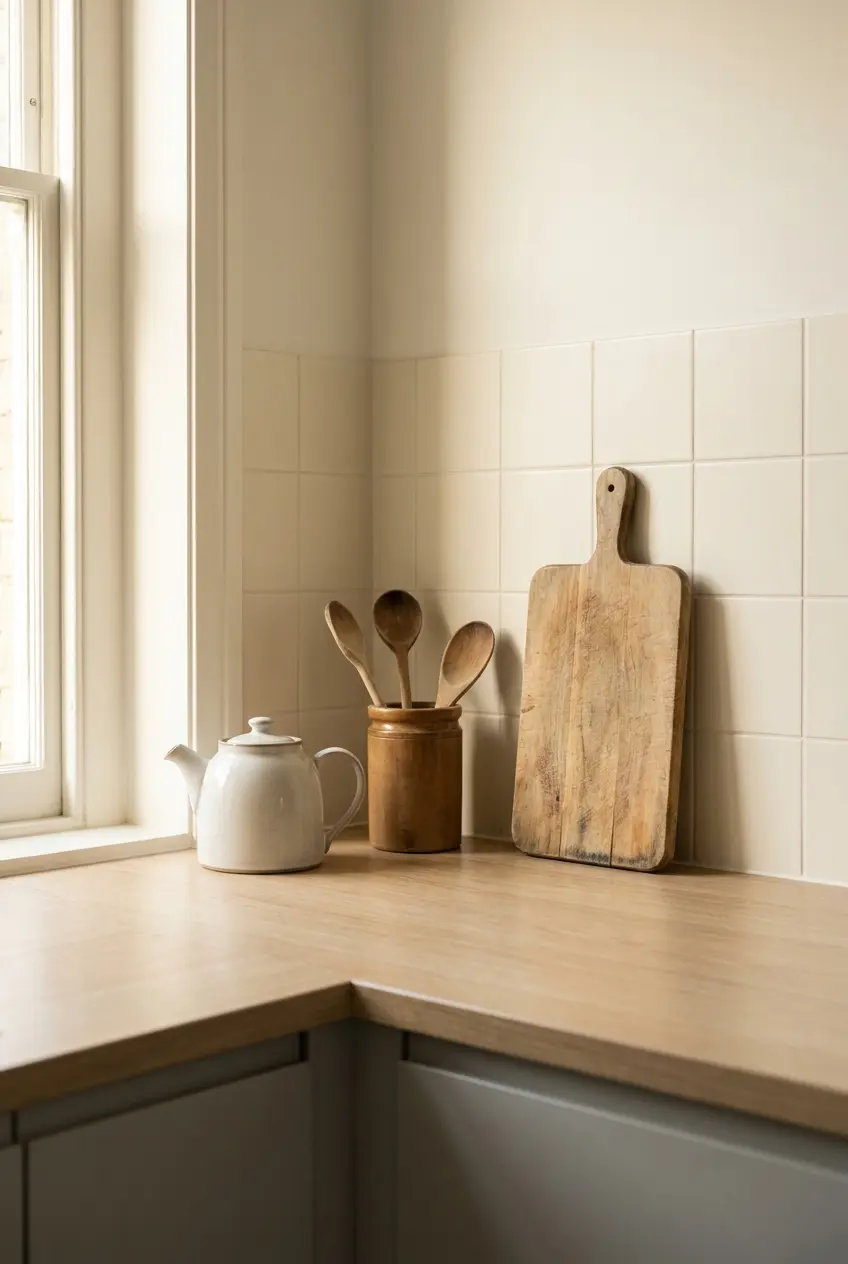
Kitchen counter organization is not really a storage problem. It is a decision problem. The counter fills up because every item on it won an argument about whether it was worth putting away, and nobody kept score.
Here is a way to keep score.
Looking for the products rather than the method? Pantry Storage Containers Worth Buying, And How Many
The rule: daily earns counter space, nothing else
An item may live on the counter if you use it most days. That is the whole rule.
Applied honestly, it usually leaves: the kettle or coffee maker, a knife block or magnetic strip, a utensil crock, salt and the oil you cook with, and a cutting board. Five to seven things.
Everything else — the stand mixer, the blender, the toaster you use on weekends, the fruit bowl holding two aging apples, the mail — loses the argument and goes somewhere else.
Deal with the small appliance problem first
Small appliances are the largest counter consumers and the hardest to move, because putting them away means lifting something heavy into a cabinet.
Two things make it survivable.
Group by frequency, not by type. The weekend-only appliances go together in one cabinet, ideally at counter height so lifting is horizontal rather than overhead.
A slim rolling cart turns “lift the mixer out of a low cabinet” into “roll the cart out”. If your appliances are heavy and your cabinets are low, this is usually the purchase that actually changes behaviour.
Move things off the surface, not around it
Rearranging a full counter produces a tidier full counter. The wins come from moving items to a different plane.
- Wall rail or magnetic strip for knives and utensils
- Under-cabinet mounts for paper towels, a small radio, mugs
- The side of the fridge for spices or foil, if it is magnetic
- A shelf riser to put a second level over the coffee setup
Every one of these removes footprint without removing the item from reach.
Give the paper a home
In most kitchens the counter is also the household inbox: mail, school forms, receipts, the thing you need to remember. Paper is the fastest-accumulating counter item and the one no appliance solution addresses.
One shallow tray or a wall pocket, emptied weekly, solves it. The specific container matters far less than the fact that paper now has an address that is not the counter.
Clear one zone completely
If the whole counter feels hopeless, do not start with the whole counter. Pick the section beside the stove or the sink and get it to zero — nothing on it at all.
An empty stretch of counter is the thing you are actually buying with all of this. Once you have experienced one, the rest of the decisions get much easier, because you know what you are protecting.
What not to buy yet
Do not buy organizers for a full counter. Clear it first using the daily rule, then see what is left over and buy for that.
Almost everyone who buys first ends up with organizers holding items that should not have been on the counter in the first place.