Space Saving Kitchen Ideas For The Gaps You Already Have
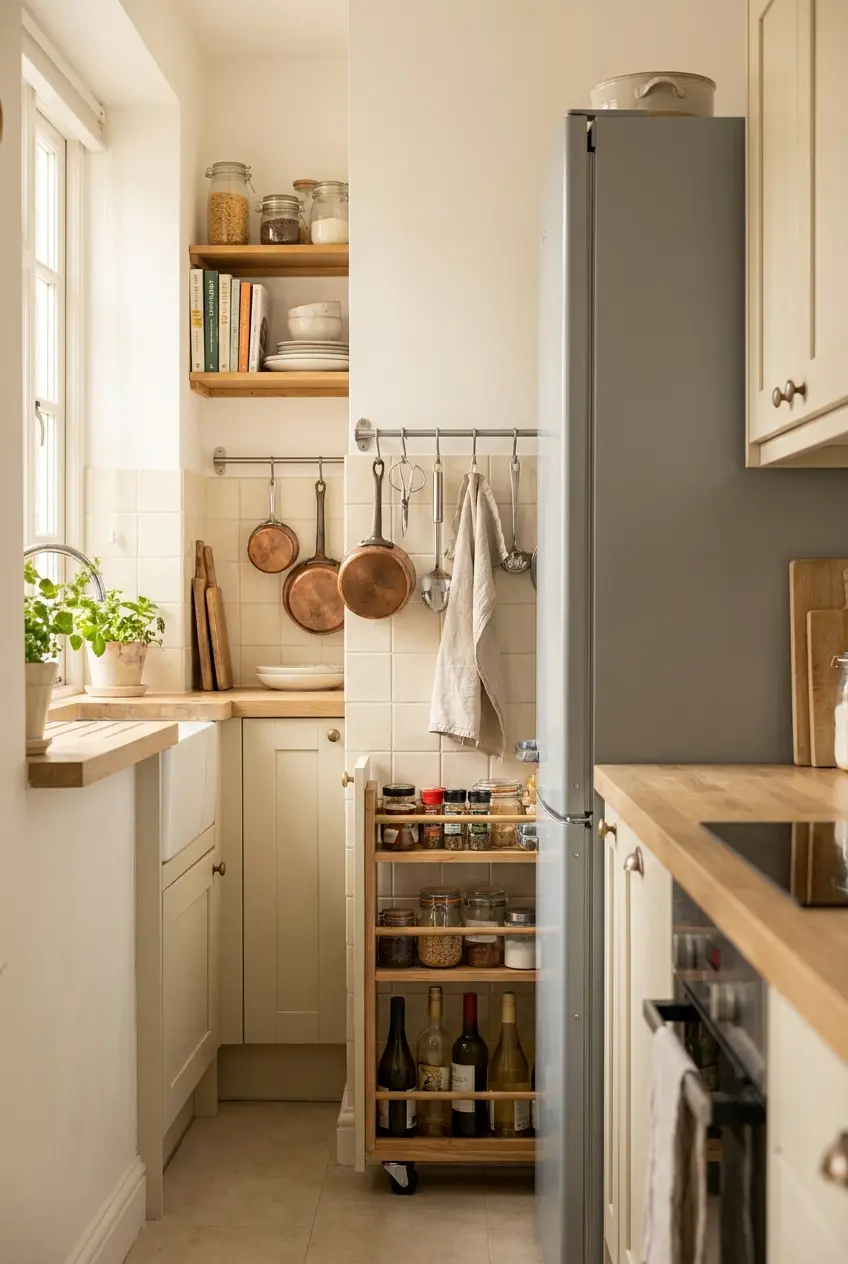
Space saving in a kitchen is mostly not about buying space-saving products. It is about noticing which cubic feet you are already paying for and not using.
Here are the places that space usually hides, roughly in order of how much you get back.
Looking for the products rather than the method? Under Sink Organizers That Clear A Standard P-Trap
The vertical gap above every shelf
Look inside any cabinet. Between the top of the tallest item and the shelf above it there is a band of empty air, usually three to eight inches, on every single shelf.
Multiply that by the number of shelves in your kitchen and it is typically the largest single volume of wasted space you have. Shelf risers, stacking inserts and under-shelf baskets all exist to reclaim it.
Start with the shelf where the gap is biggest. It is usually the one holding plates or mugs.
The back of every door
Cabinet doors, the pantry door, and the inside of the door under the sink. Flat, light, frequently used items belong here — foil boxes, sponges, spice tins, cutting boards.
The constraint is depth: usually two to three inches of clearance before the shelf. Measure before buying. This is covered in more detail in our cabinet door guide.
The wall between the counter and the upper cabinets
That strip of backsplash is dead space in most kitchens. A rail with hooks, or a narrow magnetic strip, moves the utensil crock and the knife block off the counter entirely.
In rentals, adhesive rails work if the backsplash is tile or smooth painted surface. They do not hold reliably on textured or unsealed paint.
The side of the fridge
A steel fridge side is a free vertical surface with magnetic mounting. Narrow magnetic shelves, paper towel holders and spice racks all live here without touching a wall or a cabinet.
Check first: many modern fridges have a stainless finish that is not magnetic. Test with a magnet before buying anything.
The gap beside the fridge or the stove
Most kitchens have a three-to-nine inch dead gap somewhere — beside the fridge, between the counter and the wall, next to the stove. Slim rolling carts are made for exactly this and are among the highest-return purchases in a small kitchen, because that space is currently returning nothing.
Measure the gap at its narrowest point, and check that the cart’s handle does not add width.
The toe kick and the top of the cabinets
Two places worth knowing about, with caveats.
The toe kick — the recess under the base cabinets — can hold very shallow drawers. Real space, but usually not worth the effort in a rental.
The top of the upper cabinets is genuinely large, and genuinely awful to reach. It works for seasonal items in labeled bins that you touch twice a year. It does not work for anything else, and it collects grease.
What to do first
Walk the kitchen once with a tape measure and write down every gap over three inches. Do not buy anything on the walk.
You will almost certainly find that the vertical gaps inside cabinets are the biggest number on the list, and they are the cheapest to fix. Start there.